Most businesses that end up with bad software did not pick a bad idea. They picked the wrong company to build it.
The pitch looked convincing. The portfolio looked polished. The quote came in lower than expected. Six months later, the product barely works, the team is unresponsive, and fixing what was built costs more than starting over.
This guide will help you avoid that situation. It covers what separates a real software development partner from a vendor that takes your money and disappears, the questions you should ask before signing anything, and how to protect yourself throughout the engagement.
Vendor vs. Partner: The Difference That Actually Matters
A vendor delivers what you ask for. A partner helps you figure out what you should be asking for.
That distinction sounds small. It is not.
A vendor follows your spec sheet. If your spec has errors, they build the errors into the product. If you are missing a feature that every user will need, they will not flag it. When the work is done, they move on. Your results are entirely your problem.
A partner asks uncomfortable questions before a single line of code gets written. Why do you need this feature? Who is the user, specifically? What happens if we build this and nobody uses it? Their goal is not to fill the hours you paid for. It is to make your product succeed.
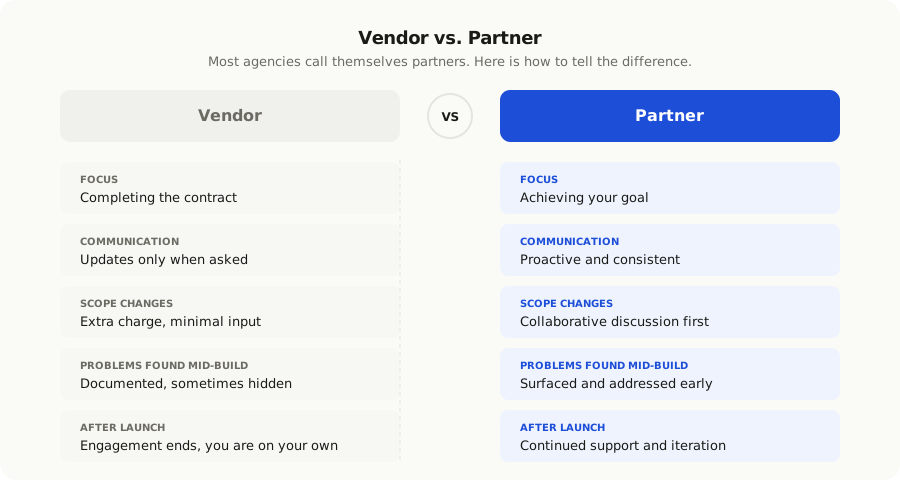
Most agencies describe themselves as partners. Few actually behave that way. The questions below will help you tell the difference before you sign.
8 Questions to Ask Before Hiring Any Development Company
1. Can you walk me through a project that did not go as planned?
Every team that has built real software has had something go sideways. How they handled it tells you more than their success stories. Look for honesty, clear thinking under pressure, and a process for managing problems. If the answer is "our projects always go smoothly," keep looking.
2. Who will actually be working on my project?
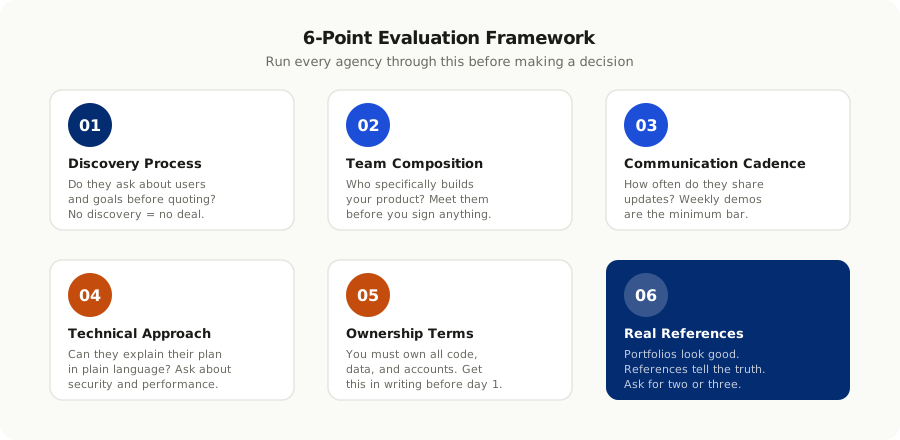
Some agencies win the sale with senior people and then build the product with junior ones. Ask for the specific people who will be on your project. Ask to meet them before you sign. Ask about their experience with the exact technology your product needs.
3. How do you handle scope changes?
Requirements change during a project. This is not a failure; it is reality. You want to understand their process for handling it. A mature team has a clear, fair process. A team that treats every change as a crisis or an upsell opportunity will make your life difficult at every turn.
4. How do you communicate progress?
You should never have to wonder what your team is working on. Ask how often they share updates, what tools they use, and how decisions get made. Weekly demos or check-ins are a reasonable baseline. Monthly status reports are not enough.
5. What does your QA process look like?
Quality assurance is where many agencies cut corners when budgets get tight. Ask how they test, who does the testing, and at what point in the build. If the answer is "we test at the end," that is a problem you will pay for after launch.
6. Who owns the code when the project ends?
You should own everything: your code, your repositories, your data, and your third-party accounts. Get this confirmed in writing before work starts. Some agencies retain intellectual property or lock clients into proprietary tools that make switching vendors expensive later.
7. What happens if you find a bug after launch?
Bugs are inevitable. What matters is how they get handled. Clarify the warranty period, what is and is not covered, and what a support engagement looks like after the initial build is complete.
8. Can I speak to two or three recent clients?
References from real clients reveal things no portfolio can. Ask them specifically about communication quality, how problems were handled during the project, and whether they would work with the team again.
Red Flags That Should Stop the Conversation
Some things are easy to miss when you are excited about starting a project. Watch for these:
- **No discovery phase.** A company that jumps straight to a quote without understanding your users, your goals, or your constraints does not know what it is quoting for.
- **A price dramatically lower than all others.** Building real software is expensive. A quote that is far below the market range is not a bargain. It is a signal that something will be cut once the contract is signed.
- **Vague ownership terms.** Anything unclear about who owns the code or data after the project is a problem that will cost you later, often at the worst possible time.
- **Guaranteed deadlines before any discovery.** No experienced team can give a firm deadline before they understand the full scope. Promises made before discovery are guesses, not plans.
- **Only one communication contact.** If the only person you can reach is a salesperson who is not involved in building your product, you will struggle to get real answers when you need them.
- **No references from similar projects.** Portfolios look good. References tell the truth. If they cannot provide contacts from clients with similar needs, be cautious.
How to Evaluate Technical Skill Without Being Technical
Most business owners and founders are not software engineers. That does not mean you cannot evaluate technical quality. Here is how.
**Ask for a technical architecture overview.** Give them a realistic summary of what you need and ask them to explain, in plain language, how they would approach it and why. You are not evaluating the technical answer itself. You are evaluating whether they can explain their reasoning clearly, and whether it sounds like someone who has thought it through.
**Look at their code samples or open-source work.** Clean, organized, well-structured code is readable even if you are not a developer. Chaotic, uncommented code is visible to anyone who looks.
**Watch how they handle your questions.** A strong technical team answers questions clearly and without defensiveness. If they make you feel uninformed for asking or give vague answers, that is a signal worth paying attention to.
**Ask about security, performance, and scalability.** You do not need to understand every detail. You need to know they are thinking about it proactively. Teams that only focus on shipping features on time rarely think about what happens when something breaks under real load.
What a Fair Contract Looks Like
Contracts protect both sides. A fair one is specific about deliverables, timelines, payment terms, and what happens when things do not go to plan.
Look for these specific elements in any contract you sign:
- **Clear deliverables.** What exactly will be built, by when, and how will you both know when it is done?
- **Payment tied to milestones.** Avoid paying everything upfront. Payments tied to real, verifiable milestones give both sides clear checkpoints throughout the project.
- **Explicit IP ownership.** You own all code, designs, data, and accounts created during the project. This should be written plainly, not buried in legal language.
- **Dispute resolution process.** What happens if you disagree on something? A clear process is far better than vague language about "good faith resolution."
- **Termination terms.** Under what conditions can either side end the agreement? What happens to the work in progress?
- **Warranty period.** What is covered after launch, for how long, and at what cost?
If a contract is missing any of these or is unclear about them, ask for specifics before you sign. A team that resists adding clarity to their contract is telling you something about how they operate.
The Real Cost of Getting This Wrong
Price is the most visible part of a software development quote. It is also the most misleading.
A $30,000 project that gets delivered late, breaks in production, or fails to solve your actual problem costs far more than $30,000 once you count the time to fix it, the revenue lost while it was broken, and the cost of the next team that has to untangle someone else's mess.
| Cost Category | Often Overlooked |
|---|---|
| Initial quote | No |
| Your team's management time | Yes |
| Delays and business impact | Yes |
| Post-launch bugs and fixes | Yes |
| Technical debt left behind | Yes |
| Cost to switch teams if things go wrong | Yes |
The team that charges 30 percent more upfront but communicates clearly, ships on time, and writes clean code almost always costs significantly less in total than the team that underbid to win your contract.
Choosing a software development partner is not a purchasing decision. It is a business relationship decision. The quality of that relationship determines the quality of what gets built.
How to Work Well with a Development Partner Once You Have Found One
Finding the right partner is only half of the work. The other half is being a good client.
**Assign one decision-maker on your side.** Development teams make decisions throughout a project. If they need five people to align on every small question, the project will slow down significantly. One person with real authority to make product decisions speeds everything up.
**Respond to reviews quickly.** Development has a rhythm. When a team shares work and waits a week for feedback, it disrupts that rhythm and often costs more time than the delay itself.
**Be clear about what is a requirement versus a preference.** You have opinions about your product, and that is healthy. Distinguishing "I want it this way but I am open to alternatives" from "this is a firm requirement" helps the team build what you actually need.
**Talk about money before it becomes a problem.** Budget conversations are uncomfortable. Have them early, especially before scope changes happen. Surprises about cost are almost always avoidable with honest, early communication.
**Trust the process when it slows things down.** Discovery phases, technical planning, and QA testing slow things down on purpose. A team that wants to rush through these stages is not doing you any favors.
The Decision Is Worth Getting Right
Choosing a software development partner is one of the most important decisions a technology-dependent business makes. It shapes how fast you can move, how much you spend, and whether your product actually gets built correctly.
The cheapest quote is rarely the right choice. The team that asks the best questions before the project starts is usually worth more than the one with the shiniest portfolio. References, contract terms, ownership clarity, and communication standards are not minor details. They are how you protect yourself and your investment.
Take the time to evaluate carefully. Ask hard questions. Expect honest answers. The right team will welcome the scrutiny, not avoid it.